 SlayTrolls
What Troll Comments Actually Cost You (Beyond the Insult)
You see the comment. You delete it — or maybe you don't, because you're not sure if deleting looks worse than ignoring it. Either way, you move on. The comment is gone, or buried. Problem solved.
Except it isn't. The damage from troll comments doesn't end when they disappear. Most of it happens before you even notice — in the heads of your real followers, and in the group chats where screenshots travel faster than you can react.
How Troll Comments Silence Your Real Supporters
There's a well-documented phenomenon in communication research called the spiral of silence: people withhold their opinions in public when they believe they're in the minority, or when they fear social backlash.1
On Facebook, this plays out in comment sections every day — real research backs it up: 27% of U.S. adults say they've refrained from posting online after witnessing harassment of others.2
When a page's comment section fills with hostility, real supporters — the ones who follow you, who share your content, who would normally speak up — go quiet. Not because they disagree with you. Because they don't want to be caught in the crossfire.
Trolls don't just insult you. A hostile comment section silences your real audience. And unlike the comments themselves, that silence doesn't disappear when you clean up the post.
The Perception Cost
Not everyone who sees your comment section knows your track record. A journalist doing a quick check, an undecided voter, a colleague scrolling past — they see whatever's on the page right now, not the context behind it.
A visible pile of troll comments — reactions, replies, laughing emojis — signals social proof in reverse. It says: other people have a problem with this person. That's enough to make someone draw the wrong conclusion.
You worked to earn your reputation. A comment section full of trolls can chip away at it in front of exactly the people who matter most — before you even get a chance to respond.
What This Actually Adds Up To
Troll comments cost you real supporter participation and credibility — all from negative comments that took a few minutes to write. Most page owners think of facebook troll moderation as cleanup. It's not. It's protection for a reputation you've spent months or years building.
The most effective defense isn't responding, deleting, or banning — it's making sure the comment never had a chance to do damage in the first place.
Hidden within seconds — before the pile-on has a chance to take hold. The troll keeps commenting into the void. Your real followers never know it happened.
That's what SlayTrolls does. Not cleanup — prevention.
References
About the author

Elmer is the founder of SlayTrolls. He is a solo developer, entrepreneur and advocate for safer online spaces. Outside of work he loves freediving and goofing around with his wife and two kids.
LinkedIn →Related posts

What a Coordinated Troll Attack Actually Looks Like (And How Fast It Spreads)
A step-by-step breakdown of how coordinated troll attacks unfold — the reaction wave, the comment flood, and the narrative hijack that puts your page at risk.

Elmer Cruz
Last updated: March 21, 2026
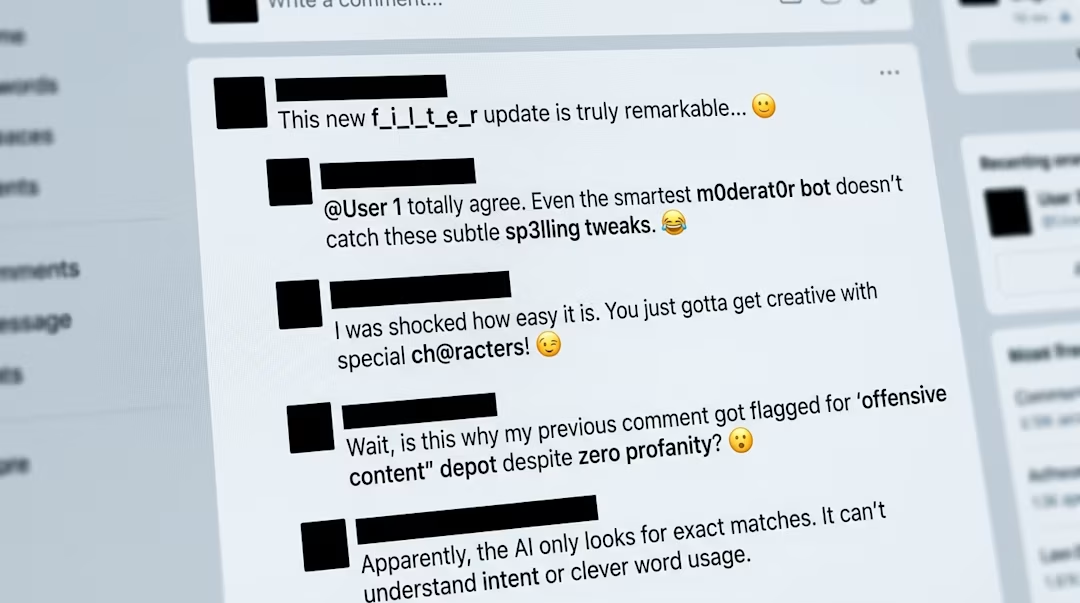
Why Keyword Filters Fail Against Trolls (And What Actually Works)
Trolls have turned filter evasion into an art form — character substitution, coded sarcasm, emoji attacks, and slang that no blocklist will ever catch. Here's why your keyword list will never be enough.
Elmer Cruz
Last updated: March 22, 2026